Selecting educational toys for preschoolers involves more than just choosing items labeled "educational." The most effective toys for this age group integrate learning seamlessly into play, targeting key developmental milestones such as fine and gross motor skills, cognitive processing, problem-solving, language acquisition, and social-emotional growth. Parents and educators seek toys that are not only engaging and safe but also offer sustained play value, adapting as a child's abilities evolve. This guide focuses on identifying toy categories that consistently deliver on these fronts, providing a framework for informed decisions that support a child's early learning journey.
What to Look For in Educational Toys for Preschoolers
When evaluating educational toys for preschoolers, several factors contribute to their overall effectiveness and longevity. Prioritize toys that are age-appropriate, ensuring they align with a child's current developmental stage while offering a slight challenge to encourage growth. Safety is paramount; toys should be non-toxic, free of small parts that pose choking hazards for younger preschoolers, and constructed from durable materials to withstand rigorous play. Look for open-ended toys that allow for multiple uses and interpretations, fostering creativity and imaginative play rather than dictating a single play pattern. Toys that encourage active participation, whether through physical manipulation, problem-solving, or social interaction, tend to have greater educational impact than passive entertainment. Finally, consider toys that support specific developmental areas, such as fine motor skills (e.g., lacing beads, puzzles), cognitive skills (e.g., shape sorters, memory games), language development (e.g., storytelling props, puppets), and social-emotional skills (e.g., pretend play sets).
1. Wooden Building Blocks
Wooden building blocks are a foundational educational toy, offering endless possibilities for creative construction and spatial reasoning. Their tactile nature and varying sizes encourage children to experiment with balance, symmetry, and structural integrity. Blocks support the development of fine motor skills through grasping and stacking, while also fostering problem-solving as children plan and execute their designs. The simplicity of wooden blocks means they can be incorporated into imaginative play, becoming castles, roads, animal enclosures, or abstract sculptures.
Best for: Developing spatial awareness, fine motor skills, and open-ended creative play.
Pros:
- Promotes understanding of basic physics and engineering principles.
- Durable and long-lasting, often passed down through generations.
- Encourages imaginative play and storytelling without predefined rules.
- Non-toxic and natural materials are often preferred for young children.
Cons:
- Can be heavy and potentially cause injury if dropped on feet.
- Limited thematic play without additional accessories.
- Storage can be bulky, requiring dedicated space.
- Initial engagement might require adult guidance to spark ideas.
Verdict: An essential investment for foundational cognitive and motor skill development, offering enduring play value through simple, tactile interaction and fostering a child's innate creativity.
2. Magnetic Building Tiles
Magnetic building tiles provide a modern twist on construction play, allowing preschoolers to create intricate 2D and 3D structures with ease due to their magnetic connections. These tiles introduce concepts of geometry, magnetism, and basic engineering in a highly engaging format. Children can quickly assemble and disassemble structures, experimenting with different shapes and designs, which aids in understanding spatial relationships and problem-solving. The transparent nature of many magnetic tiles also allows for exploration of light and color when held up to a window or light source.
Best for: Geometric understanding, creative construction, and spatial reasoning with quick assembly.
Pros:
- Easy to connect and disconnect, reducing frustration for young builders.
- Supports learning about shapes, symmetry, and basic architectural design.
- Encourages imaginative play, from simple houses to complex vehicles.
- Can be used on light tables for exploring color and transparency.
Cons:
- Can be expensive, especially for larger sets.
- Smaller pieces might pose a choking hazard for children under three.
- Magnets can lose strength over time with extensive use.
- Structures can sometimes collapse unexpectedly, requiring patience.
Verdict: A highly engaging tool for introducing geometry and engineering concepts, magnetic tiles offer a dynamic building experience that encourages both structured learning and free-form creativity.
3. Shape Sorters and Puzzles
Shape sorters and puzzles are classic educational toys designed to develop cognitive skills, problem-solving abilities, and fine motor coordination. Shape sorters challenge preschoolers to match geometric shapes to corresponding holes, reinforcing shape recognition and hand-eye coordination. Puzzles, ranging from simple knob puzzles to multi-piece jigsaw puzzles, require children to analyze shapes, colors, and patterns to fit pieces together, promoting logical thinking and spatial reasoning. Both toy types offer immediate feedback, allowing children to self-correct and build confidence.
Best for: Cognitive development, shape recognition, fine motor skills, and problem-solving.
Pros:
- Directly reinforces shape and color recognition.
- Enhances hand-eye coordination and dexterity.
- Teaches problem-solving through trial and error.
- Provides a sense of accomplishment upon completion.
Cons:
- Can become repetitive once mastered, limiting long-term engagement.
- Simpler puzzles may not challenge older preschoolers sufficiently.
- Pieces can be easily lost, rendering the toy incomplete.
- Some puzzles may have small parts, requiring supervision.
Verdict: Fundamental for early cognitive and motor skill development, shape sorters and puzzles provide structured learning opportunities that build foundational understanding and critical thinking in a tangible way.
4. Art Easels with Supplies
An art easel equipped with crayons, washable markers, paint, and paper provides a dedicated space for preschoolers to explore their creativity and develop fine motor skills. Drawing, painting, and scribbling are crucial for strengthening hand muscles, improving grip, and preparing for pre-writing skills. Beyond motor development, art encourages self-expression, color recognition, and imaginative thinking. The large surface of an easel allows for expansive movements, which is beneficial for developing gross motor skills and coordination.
Best for: Creative expression, fine motor skill development, and pre-writing practice.
Pros:
- Fosters creativity, imagination, and self-expression.
- Strengthens hand muscles and improves dexterity essential for writing.
- Introduces concepts of color mixing and artistic techniques.
- Provides a designated, often double-sided, space for art activities.
Cons:
- Can be messy, requiring supervision and cleanup.
- Requires ongoing replenishment of art supplies.
- Takes up floor space, which might be a consideration in smaller rooms.
- Some children may prefer floor-based art activities.
Verdict: An excellent tool for nurturing artistic talent and refining motor skills, an art easel offers a versatile platform for creative exploration that supports both cognitive and physical development.
5. Pretend Play Kitchens and Food Sets
Pretend play kitchens and associated food sets are powerful catalysts for social-emotional development, language skills, and imaginative play. Through role-playing cooking, serving, and eating, preschoolers mimic real-life scenarios, developing empathy, cooperation, and communication skills. They learn to negotiate roles, share, and understand different perspectives. This type of play also expands vocabulary related to food, cooking, and household activities, while fostering creativity as children invent their own culinary narratives.
Best for: Social-emotional development, language acquisition, and imaginative role-playing.
Pros:
- Encourages cooperative play and social interaction.
- Expands vocabulary and narrative skills through role-playing.
- Fosters empathy and understanding of daily routines.
- Promotes creative problem-solving in simulated scenarios.
Cons:
- Can be large and take up significant space.
- Requires multiple accessories (food, utensils) that can get scattered.
- Some sets may have small, easily lost parts.
- Quality varies, with cheaper plastic sets being less durable.
Verdict: Indispensable for fostering social skills and imaginative thinking, a pretend play kitchen provides a rich environment for children to explore real-world roles and develop crucial communication abilities.
6. Musical Instrument Sets
Simple musical instrument sets, such as xylophones, shakers, drums, and tambourines, introduce preschoolers to rhythm, pitch, and sound exploration. Engaging with musical instruments enhances auditory discrimination, which is a key component of language development and literacy. Playing instruments also improves fine motor skills and hand-eye coordination as children learn to strike, shake, or tap to create sounds. Beyond these benefits, music fosters emotional expression, creativity, and can be a powerful tool for self-regulation and mood enhancement.
Best for: Auditory development, rhythm recognition, fine motor skills, and emotional expression.
Pros:
- Stimulates auditory senses and helps differentiate sounds.
- Develops a sense of rhythm and timing.
- Enhances fine motor skills and hand-eye coordination.
- Provides an outlet for creative and emotional expression.
Cons:
- Can be noisy, requiring tolerance from adults.
- Some instruments may not be durable enough for vigorous play.
- Quality of sound can vary greatly between sets.
- Requires supervision to prevent misuse or damage.
Verdict: A valuable resource for sensory and cognitive development, musical instrument sets encourage exploration of sound and rhythm, contributing to language readiness and emotional regulation in an enjoyable format.
7. Early Learning Board Games
Specially designed early learning board games introduce preschoolers to concepts like counting, color matching, sequencing, and turn-taking in a structured, engaging format. Games such as "Candy Land" or simple memory matching games teach children to follow rules, strategize, and manage winning and losing gracefully. These activities are crucial for developing social skills, patience, and concentration. The interactive nature of board games also provides opportunities for language development as children communicate their moves and discuss game outcomes.
Best for: Social skills, rule-following, early math concepts, and memory development.
Pros:
- Teaches turn-taking, sharing, and good sportsmanship.
- Reinforces early academic concepts like counting and color recognition.
- Develops memory and concentration skills.
- Encourages family interaction and communication.
Cons:
- Requires adult supervision or participation.
- Can lead to frustration for children who struggle with losing.
- Some games may have small pieces that can be lost or swallowed.
- Engagement can be limited if the child loses interest quickly.
Verdict: Excellent for fostering social-emotional growth and introducing foundational academic skills, early learning board games provide structured play that builds patience, strategic thinking, and cooperative behavior.
8. Duplo-Style Construction Bricks
Duplo-style construction bricks are larger, easier-to-handle versions of classic building bricks, specifically designed for preschoolers. Their size makes them ideal for developing fine motor skills and hand-eye coordination without the frustration often associated with smaller bricks. These bricks encourage creative construction, allowing children to build anything from simple towers to complex vehicles and animals. They promote problem-solving, spatial reasoning, and imaginative play, often coming in themed sets that inspire specific narratives.
Best for: Fine motor development, creative construction, and imaginative play for younger preschoolers.
Pros:
- Large size is easy for small hands to manipulate.
- Durable and safe, with no small parts to pose choking hazards.
- Encourages open-ended building and imaginative storytelling.
- Compatible with other similar large brick systems, expanding play possibilities.
Cons:
- Can be bulky to store, especially large collections.
- May be outgrown quickly by children who develop fine motor skills rapidly.
- Thematic sets can sometimes limit purely open-ended construction.
- Can be expensive, particularly for larger starter sets.
Verdict: An ideal entry point into construction play, Duplo-style bricks provide a safe and accessible way for preschoolers to develop fine motor skills, spatial reasoning, and creative expression through building.
9. Lacing Beads and Pegboards
Lacing beads and pegboards are meticulously designed to enhance fine motor skills, hand-eye coordination, and concentration in preschoolers. Lacing activities require precise manipulation to thread strings through holes, strengthening the pincer grasp and bilateral coordination. Pegboards challenge children to place pegs into specific holes or create patterns, which develops dexterity, visual perception, and early mathematical concepts like patterning and sequencing. Both activities demand sustained focus, contributing to improved attention spans.
Best for: Fine motor skill refinement, hand-eye coordination, concentration, and patterning.
Pros:
- Significantly improves fine motor control and dexterity.
- Enhances hand-eye coordination and visual perception.
- Develops concentration and problem-solving through pattern creation.
- Often come in vibrant colors, aiding color recognition.
Cons:
- Small pieces (beads, pegs) can be a choking hazard for younger children.
- Can be frustrating if a child lacks the necessary fine motor control.
- Limited open-ended play compared to construction toys.
- Beads and pegs can easily get lost, rendering sets incomplete.
Verdict: Highly effective for targeted fine motor skill development and concentration, lacing beads and pegboards offer structured activities that are crucial for pre-writing readiness and visual-spatial reasoning.
10. Science Experiment Kits for Preschoolers
Simple science experiment kits for preschoolers introduce basic scientific concepts through hands-on exploration. These kits might include items for exploring magnetism, observing plant growth, mixing colors, or understanding cause and effect. They encourage curiosity, observation skills, and critical thinking as children predict outcomes and analyze results. Such kits foster a love for discovery and provide concrete experiences that lay the groundwork for future scientific understanding, often incorporating sensory play.
Best for: Fostering curiosity, observation skills, cause-and-effect understanding, and early scientific inquiry.
Pros:
- Sparks curiosity and a love for scientific discovery.
- Develops observation skills and critical thinking.
- Provides concrete understanding of abstract concepts.
- Encourages hands-on exploration and sensory engagement.
Cons:
- Requires significant adult supervision and involvement.
- Some kits may have limited experiments, reducing replay value.
- Can be messy, involving liquids or small components.
- Results may not always be immediately apparent, requiring patience.
Verdict: An excellent way to ignite a passion for learning and scientific exploration, these kits provide engaging, hands-on experiences that build foundational understanding of the natural world and critical thinking.
11. Sensory Bins and Materials
Sensory bins, filled with materials like rice, beans, water beads, sand, or shredded paper, provide a rich tactile experience for preschoolers. These bins can be customized with scoops, small toys, and natural elements to encourage imaginative play, fine motor skill development, and sensory exploration. Playing in a sensory bin helps children regulate their emotions, focus their attention, and explore different textures and properties of materials. It also fosters language development as children describe their sensory experiences and engage in imaginative scenarios.
Best for: Sensory exploration, fine motor skill development, imaginative play, and emotional regulation.
Pros:
- Provides a calming and engaging tactile experience.
- Enhances fine motor skills through scooping, pouring, and manipulating materials.
- Fosters imaginative play and storytelling.
- Can be easily customized with various themes and materials.
Cons:
- Can be messy, requiring a designated play area and cleanup.
- Materials need regular refreshing or cleaning to maintain hygiene.
- Some materials may pose choking hazards for very young preschoolers.
- Requires initial setup and ongoing maintenance from adults.
Verdict: A highly versatile and engaging tool for holistic development, sensory bins offer a rich environment for tactile exploration, fine motor skill refinement, and imaginative play, supporting both cognitive and emotional growth.
12. Early Coding and Logic Games (Screen-Free)
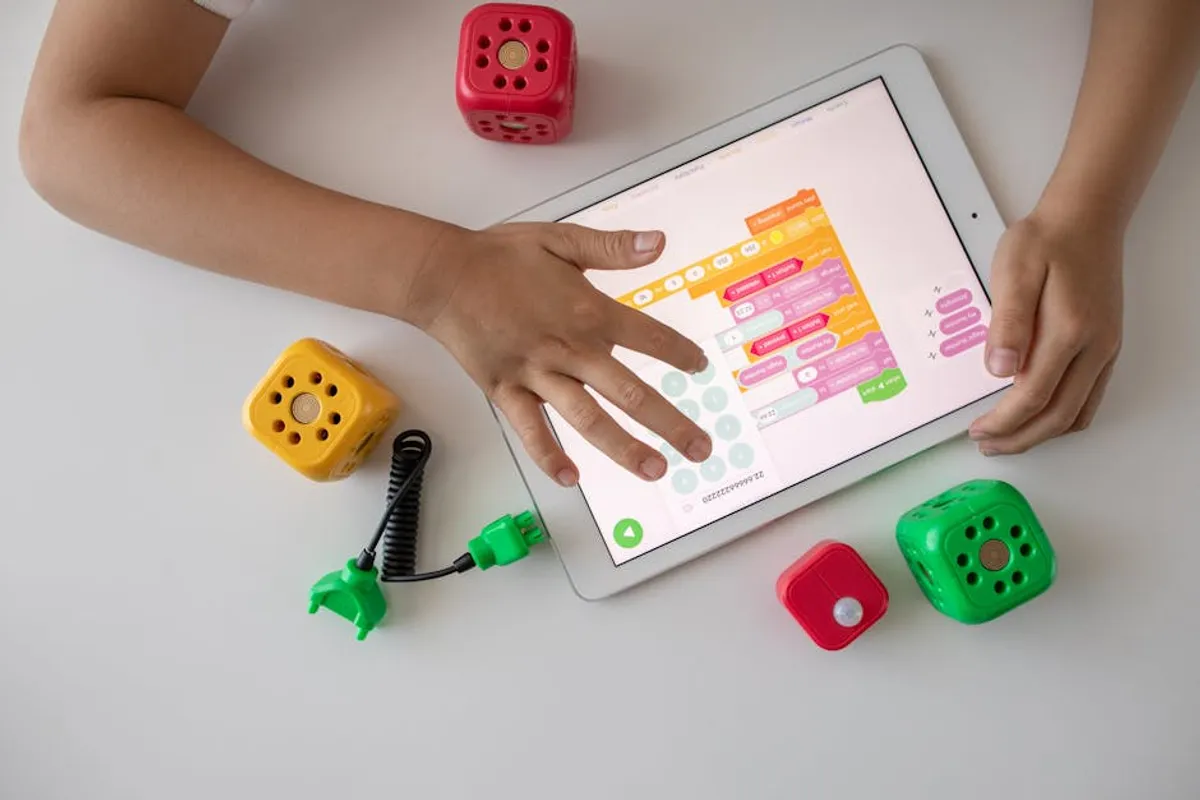
Screen-free early coding and logic games introduce preschoolers to computational thinking, sequencing, and problem-solving without relying on digital devices. These toys often involve physical pieces that children arrange to create a path or sequence of actions for a character or robot. They teach fundamental concepts like algorithms, debugging, and conditional logic in a tangible, accessible way. This type of play develops critical thinking, spatial reasoning, and persistence as children experiment to achieve desired outcomes.
Best for: Introducing computational thinking, sequencing, problem-solving, and logical reasoning.
Pros:
- Develops foundational coding concepts without screen time.
- Enhances logical reasoning and problem-solving skills.
- Encourages persistence and critical thinking through trial and error.
- Often involves tactile manipulation, aiding fine motor skills.
Cons:
- Can be challenging for some preschoolers, requiring adult guidance.
- May have a steeper learning curve than other toy types.
- Limited replay value once all puzzles or paths are solved.
- Some sets can be expensive for their specific function.
Verdict: An innovative approach to developing critical 21st-century skills, screen-free coding games offer a tangible and engaging way for preschoolers to grasp foundational logical and computational concepts.
Choosing the Right Educational Toy for Your Preschooler
Selecting the most suitable educational toy for a preschooler involves a nuanced understanding of their individual developmental stage, interests, and temperament. Beyond the general categories discussed, consider observing your child's current play preferences: are they drawn to building, imaginative scenarios, or quiet, focused tasks? A toy that aligns with existing interests is more likely to be engaged with consistently. Furthermore, assess the toy's potential for growth; the best educational toys offer layers of complexity that can be explored as a child's skills advance, ensuring sustained relevance beyond initial novelty. Prioritize toys that encourage active participation and interaction over passive observation, as direct engagement is key to meaningful learning experiences. Finally, remember that the most impactful educational tool is often shared play with a responsive adult, where toys serve as catalysts for conversation, collaboration, and deeper exploration.
Frequently Asked Questions About Educational Toys for Preschoolers
Q: What age range defines "preschooler" for educational toys?
A: Generally, "preschooler" refers to children aged 3 to 5 years. However, developmental stages vary, so always consider a specific toy's recommended age range and your child's individual abilities.
Q: How can I tell if a toy is truly educational or just marketed as such?
A: True educational toys promote active engagement, critical thinking, problem-solving, creativity, or specific skill development (e.g., fine motor, language). Avoid toys that are overly prescriptive, offer limited play patterns, or primarily rely on passive entertainment.
Q: Are screen-based educational apps or games beneficial for preschoolers?
A: While some apps can offer educational content, screen time for preschoolers should be limited and supervised. Prioritize tangible, hands-on toys that encourage physical manipulation, social interaction, and open-ended imaginative play, as these are crucial for foundational development.
Q: How many educational toys does a preschooler need?
A: Quality often outweighs quantity. A curated selection of versatile, open-ended toys that support different developmental areas is more beneficial than a large volume of single-purpose items. Rotating toys can also maintain interest and engagement.
Q: How do I ensure educational toys remain engaging over time?
A: Introduce new ways to play with existing toys, combine different toy sets, or incorporate them into imaginative scenarios. Engaging in play alongside your child, asking open-ended questions, and encouraging their unique ideas can also extend a toy's lifespan and educational value.