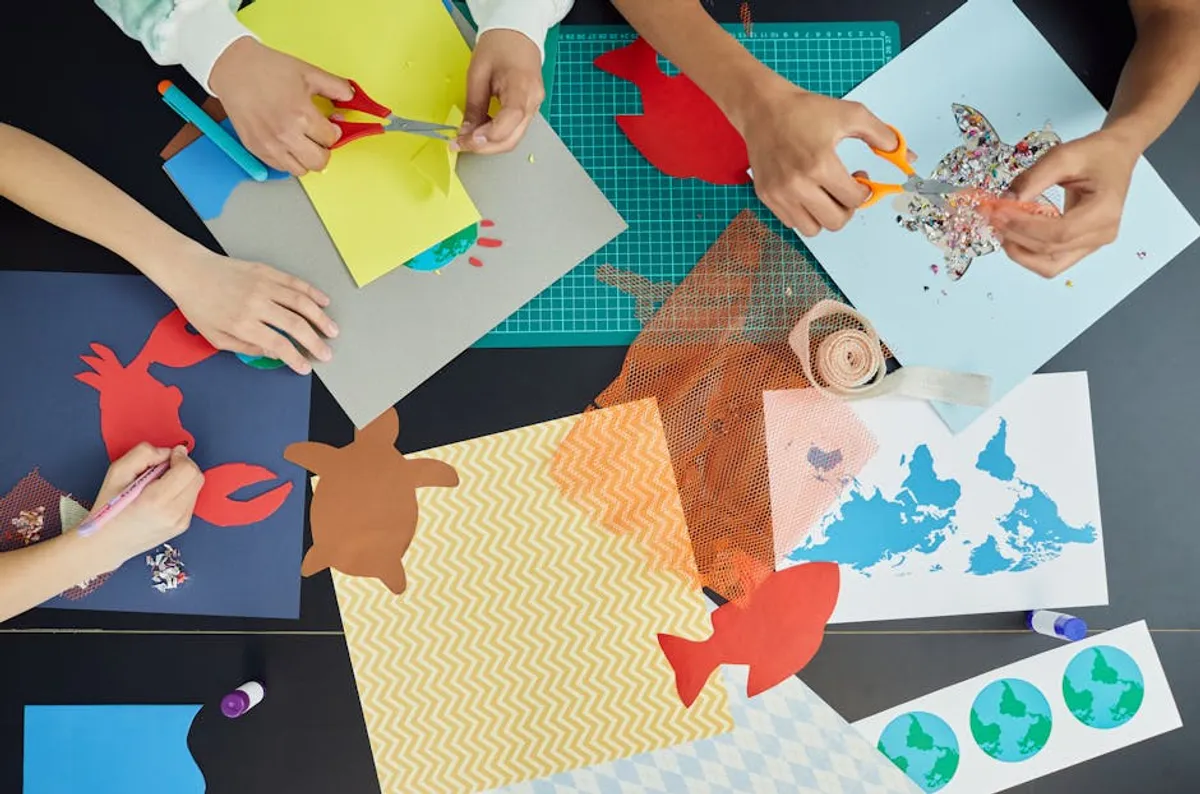
When rain confines children indoors, the challenge for parents and caregivers shifts from outdoor exploration to engaging, constructive indoor activity. The right craft idea can transform a dreary afternoon into a period of creative discovery, skill development, and focused play. Effective rainy day crafts are not merely time-fillers; they offer opportunities for fine motor skill refinement, imaginative expression, problem-solving, and often, collaborative family time. Choosing the best options involves considering factors like material accessibility, mess potential, age appropriateness, and the craft's ability to sustain interest beyond initial setup.
This guide provides a curated selection of craft ideas, each assessed for its practical application in a home environment. The focus is on projects that deliver tangible results, utilize common household items or inexpensive supplies, and cater to a range of developmental stages. The aim is to equip you with actionable choices that minimize stress and maximize engagement during those inevitable indoor days.
How to Select the Ideal Rainy Day Craft
Before diving into specific projects, consider these parameters to ensure the chosen craft aligns with your household's resources and your child's needs:
- Age Appropriateness: Younger children thrive with simpler, tactile crafts that involve basic manipulation, while older children can handle multi-step projects requiring more precision and planning. Ensure the craft materials are safe for the child's age group, particularly concerning small parts or non-toxic ingredients.
- Material Availability and Cost: Prioritize crafts that use items you likely already have (e.g., paper, cardboard, kitchen staples) or inexpensive, easily sourced materials. This minimizes last-minute store runs and keeps the activity budget-friendly.
- Mess Factor: Assess your tolerance for mess. Some crafts, like painting or glitter projects, require more extensive setup and cleanup. Others, such as pipe cleaner creations or simple paper folding, are considerably tidier. Prepare your workspace with old newspapers or a washable mat if mess is anticipated.
- Engagement Duration: Consider how long the craft is likely to hold your child's attention. Some projects are quick wins, offering immediate gratification, while others are multi-stage endeavors that can span several hours or even days, fostering sustained engagement.
- Skill Development Focus: Many crafts inherently promote specific skills: fine motor control (cutting, gluing, beading), creative thinking (design, color choice), spatial reasoning (construction, folding), or even early literacy (storytelling through puppets). Choose crafts that align with developmental goals or interests.
- Adult Involvement Level: Determine how much supervision or assistance the craft requires. Some projects allow for independent play, freeing up adult time, while others are best enjoyed as a collaborative parent-child activity.
1. Paper Plate Animals and Masks
This craft leverages readily available paper plates as a versatile base for countless animal faces or wearable masks. It encourages imaginative play and introduces basic geometry through cutting and shaping. Children can transform a simple circle into a lion, frog, cat, or any creature they envision by adding cut-out features, yarn for manes, or pipe cleaners for whiskers. The simplicity of the primary material allows for broad creative interpretation without significant investment in specialized supplies.
Best for: Toddlers to early elementary, imaginative play, low-cost creativity.
Pros:
- Utilizes common household items, minimizing material cost.
- Highly adaptable to various age groups and skill levels.
- Promotes fine motor skills through cutting, gluing, and decorating.
- Results in a tangible item for continued play or display.
- Relatively low mess, especially if using glue sticks and markers instead of paint.
Cons:
- Requires adult supervision for younger children using scissors.
- Can be a short-duration activity unless multiple animals are made or incorporated into a larger play scenario.
Verdict: A foundational craft that consistently delivers engaging results with minimal fuss. Its open-ended nature ensures sustained appeal across many rainy afternoons.
2. DIY Playdough
Homemade playdough offers a sensory experience unmatched by many other crafts. Using kitchen staples like flour, salt, water, and oil, it's a cost-effective and non-toxic alternative to store-bought versions. The process of making the dough itself can be part of the activity, teaching basic measurements and the transformation of ingredients. Once prepared, the dough provides endless opportunities for sculpting, rolling, cutting, and imaginative world-building, fostering fine motor skills and tactile exploration.
Best for: Toddlers and preschoolers, sensory play, fine motor development.
Pros:
- Inexpensive to make with common pantry items.
- Provides a rich tactile and sensory experience.
- Encourages open-ended creative play and sculpting.
- Can be scented or colored for added sensory input.
- Non-toxic and safe for young children.
Cons:
- Can be messy during both creation and play, requiring a designated surface.
- Requires some adult involvement for cooking the dough (if using a cooked recipe).
- Limited shelf life compared to commercial playdough, typically a few weeks in an airtight container.
Verdict: An excellent choice for sustained, independent sensory play that also offers an educational component in its creation. The mess is manageable for the benefits gained.
3. Rock Painting
Collecting smooth rocks from a garden or local park transforms into an art project with a few acrylic paints or paint pens. This craft connects children to nature, even when indoors, and provides a durable canvas for creative expression. Rocks can be painted with intricate designs, simple patterns, animals, or encouraging messages to be hidden in public spaces for others to find (a popular trend known as "kindness rocks"). It requires focus and precision, making it suitable for a range of ages with varying levels of detail.
Best for: Elementary to pre-teen, nature connection, fine detail work, creating lasting keepsakes.
Pros:
- Low material cost if rocks are gathered locally.
- Encourages observation of nature and appreciation for natural forms.
- Develops fine motor skills and artistic expression.
- Creates durable, displayable art or gifts.
- Can be a multi-stage activity (collecting, washing, painting, sealing).
Cons:
- Can be messy with paint, requiring protective surfaces and clothing.
- Requires specific types of paint (acrylic) and potentially a sealant for durability.
- Drying time between layers can extend the activity.
Verdict: A rewarding craft that combines outdoor exploration with indoor artistic endeavor, yielding unique, lasting pieces that can be shared or cherished.
4. Cardboard Box Forts and Creations
The humble cardboard box offers unparalleled potential for large-scale imaginative construction. From a simple fort to a spaceship, car, or puppet theater, boxes become the foundation for grand projects that engage spatial reasoning and collaborative problem-solving. This craft encourages children to think in three dimensions, plan structures, and use tools like tape, glue, and scissors to bring their visions to life. It's a fantastic way to upcycle packaging materials and stimulate open-ended play.
Best for: All ages (with appropriate adult help), collaborative projects, large-scale imaginative play.
Pros:
- Utilizes free, recycled materials, making it highly cost-effective.
- Promotes spatial reasoning, planning, and problem-solving skills.
- Encourages collaborative work and communication.
- Results in a large-scale prop for extended imaginative play.
- Highly adaptable to various themes and interests.
Cons:
- Requires significant space, both for construction and subsequent play.
- Can be challenging for younger children without substantial adult assistance for cutting and assembly.
- Requires a good supply of sturdy boxes and strong adhesive (packing tape often works best).
Verdict: An excellent choice for ambitious, long-duration projects that foster deep engagement and provide a significant play outcome. Best suited for families with ample space and a willingness to collaborate.
5. Salt Dough Ornaments and Sculptures
Similar to playdough but with the added benefit of hardening, salt dough allows children to create permanent keepsakes. Made from flour, salt, and water, it's a simple, non-toxic medium for sculpting small figures, handprints, or decorative ornaments. Once air-dried or baked, the creations can be painted, varnished, or embellished, offering a two-stage craft experience. This process teaches about material properties and provides a lasting memento of a child's artistic endeavors.
Best for: Preschool to elementary, creating lasting keepsakes, tactile sculpting.
Pros:
- Inexpensive and uses basic kitchen ingredients.
- Provides a tactile sculpting experience.
- Results in durable, paintable creations that can be kept or gifted.
- Can be a multi-day project (sculpting, drying/baking, painting).
- Excellent for making personalized gifts or holiday ornaments.
Cons:
- Requires drying or baking time, extending the project duration.
- Can be fragile if not handled carefully after drying.
- Messy during the initial mixing and sculpting phases.
Verdict: A highly rewarding craft for creating personalized, durable art pieces. The multi-stage process maintains interest and provides a tangible memory.
6. Pipe Cleaner and Pom-Pom Creatures
Pipe cleaners and pom-poms are versatile, colorful, and require minimal cleanup, making them ideal for spontaneous crafting. Children can bend, twist, and glue these materials into an endless array of creatures, abstract sculptures, or decorative elements. This activity is particularly effective for developing fine motor skills, hand-eye coordination, and understanding three-dimensional form. The lack of significant mess and the immediate results make it highly satisfying for younger crafters.
Best for: Toddlers to early elementary, fine motor skill development, quick and tidy creative bursts.
Pros:
- Materials are inexpensive and reusable.
- Very low mess factor, ideal for quick setup and cleanup.
- Excellent for developing fine motor skills and dexterity.
- Encourages imaginative construction and abstract thinking.
- Immediate gratification as creations take shape quickly.
Cons:
- Can require a hot glue gun for secure attachment (adult supervision needed) or a good quality craft glue with drying time.
- Smaller pieces can be a choking hazard for very young children.
Verdict: A highly accessible and engaging craft that delivers significant developmental benefits with minimal parental oversight and cleanup. Perfect for impromptu creative sessions.
7. Yarn-Wrapped Sticks or Bottles
This craft transforms natural elements or recycled containers into decorative art using colorful yarn. Children wrap sticks (collected on a walk) or clean plastic bottles with various colors and textures of yarn, securing them with glue. It's a meditative activity that builds patience and fine motor skills. The resulting pieces can be abstract sculptures, decorative vases, or even "magic wands," fostering an appreciation for texture and color layering.
Best for: Elementary to pre-teen, fine motor skill development, upcycling, meditative crafting.
Pros:
- Utilizes free natural elements or recycled materials.
- Promotes patience, focus, and fine motor dexterity.
- Relatively low mess, especially with glue sticks or quick-drying craft glue.
- Creates attractive, textural decorative items.
- Teaches about patterns and color combinations.
Cons:
- Can be time-consuming, requiring sustained attention.
- Requires a good supply of yarn, which can add to material cost if not already available.
- Securing the yarn neatly can be challenging for younger children.
Verdict: A calming, focus-driven craft that yields beautiful, textural results. It's an excellent project for older children who enjoy detailed work and sustained engagement.
8. Simple Origami
Origami, the art of paper folding, introduces children to geometric principles, precision, and sequential instructions. Starting with simple folds like a paper airplane, boat, or fortune teller, children learn to follow directions carefully and develop spatial reasoning. This craft requires minimal materials—just paper—and offers a quiet, focused activity that can be done almost anywhere. It's an excellent way to build concentration and fine motor control without any mess.
Best for: Elementary to pre-teen, fine motor skills, following instructions, spatial reasoning, quiet focus.
Pros:
- Requires only paper, making it extremely cost-effective and portable.
- Develops fine motor skills, precision, and problem-solving.
- Enhances concentration and ability to follow sequential instructions.
- Completely mess-free.
- Offers a sense of accomplishment upon completing a figure.
Cons:
- Can be frustrating for children who struggle with precision or following detailed steps.
- Requires clear instructions (diagrams or videos) for specific folds.
- The initial learning curve can be steep for some.
Verdict: An intellectually stimulating craft that builds focus and precision with zero mess. Best introduced with very simple projects to build confidence before moving to more complex designs.
9. Coffee Filter Art (Markers and Water)
This simple yet visually stunning craft utilizes coffee filters, washable markers, and a spray bottle of water to explore color blending and capillary action. Children draw designs or color sections on flat coffee filters with markers. A light misting of water then causes the colors to spread and blend, creating beautiful, abstract patterns. Once dry, these can be displayed as suncatchers, transformed into butterflies, or used as decorative elements. It's a quick, low-cost activity with immediate, striking results.
Best for: Preschool to elementary, color exploration, science introduction, quick visual gratification.
Pros:
- Inexpensive and uses common household items.
- Introduces basic scientific concepts (capillary action, color mixing).
- Creates vibrant, unique, and often surprising results.
- Relatively low mess, especially if done over a protected surface.
- Quick to set up and complete, with a short drying time.
Cons:
- Requires washable markers to prevent permanent stains.
- Can become oversaturated if too much water is applied.
- The final product is delicate and can tear easily.
Verdict: An engaging craft that combines art and a touch of science, offering beautiful, unpredictable results with minimal effort and cost. Ideal for a quick, colorful burst of creativity.
10. Newspaper Fashion or Sculpture
Transforming old newspapers into wearable art or three-dimensional sculptures encourages large-scale creativity and resourcefulness. Children can tear, crumple, fold, and tape newspaper into hats, vests, skirts, or abstract forms. This craft promotes imaginative design, understanding of form and structure, and the value of upcycling. It's a collaborative activity that can involve entire families and results in impressive, albeit temporary, creations.
Best for: Elementary to pre-teen, collaborative projects, large-scale design, upcycling.
Pros:
- Uses free, recycled materials, making it highly sustainable and cost-effective.
- Encourages large-scale design and imaginative construction.
- Promotes collaborative teamwork and problem-solving.
- Develops spatial awareness and understanding of form.
- Can lead to extended imaginative play with the creations.
Cons:
- Can be messy with ink transfer, requiring protective surfaces and clothing.
- Requires a significant amount of newspaper and adhesive (tape).
- Creations are temporary and not durable for long-term keeping.
Verdict: A fantastic craft for expansive, imaginative projects that foster collaboration and resourcefulness. Embrace the temporary nature of the art and the potential for mess.
11. Q-Tip Painting
Q-tip painting offers a unique approach to art that focuses on precision, pattern, and fine motor control. Instead of traditional brushes, children use cotton swabs to apply small dots of paint, creating pointillist-style art, intricate patterns, or filling in outlines. This technique encourages patience and careful application, making it excellent for developing hand-eye coordination and controlled movements. It uses minimal paint, reducing mess, and allows for detailed work even with young children.
Best for: Preschool to elementary, fine motor control, pattern recognition, detailed art.
Pros:
- Requires minimal paint, reducing overall mess.
- Excellent for developing fine motor skills and hand-eye coordination.
- Encourages patience and attention to detail.
- Allows for intricate designs and patterns.
- Inexpensive materials (Q-tips, paint, paper).
Cons:
- Can be slow and require sustained focus, potentially challenging for very energetic children.
- Results can be less vibrant than full-brush painting if not layered effectively.
Verdict: A focused and calming art activity that significantly boosts fine motor skills and encourages detailed artistic expression with minimal cleanup.
12. Nature Mandalas or Collages
Even on a rainy day, children can engage with nature by using items collected previously (leaves, small stones, twigs, flower petals) to create indoor mandalas or collages. A mandala involves arranging natural elements in a circular, symmetrical pattern on a piece of paper or cardboard, while collages allow for more free-form compositions. This activity encourages observation, sorting, pattern creation, and an appreciation for natural textures and forms. It's a quiet, reflective craft that can be done individually or collaboratively.
Best for: All ages, nature appreciation, pattern recognition, fine motor skills, quiet reflection.
Pros:
- Utilizes free, natural elements, promoting an appreciation for the outdoors.
- Encourages observation, sorting, and classification skills.
- Develops fine motor skills and aesthetic arrangement.
- Can be a calming and meditative activity.
- Low mess, especially if using glue sticks for collages.
Cons:
- Requires pre-collected natural materials, which might not be readily available on a spontaneous rainy day.
- Fresh natural elements may wilt or change appearance over time in a collage.
- Mandalas are temporary unless photographed or carefully preserved.
Verdict: A thoughtful and engaging craft that brings the beauty of nature indoors, fostering creativity and observation skills with minimal material cost and mess.
Selecting the Ideal Craft for Your Family
The best rainy day craft is ultimately one that resonates with your child's interests, developmental stage, and your family's available resources and time. Consider the "return on investment" not just in terms of cost, but also in sustained engagement, skill development, and the joy it brings. Some days call for quick, low-mess activities, while others allow for elaborate, multi-stage projects. Keep a small stash of versatile craft supplies—paper, glue, scissors, markers, and a few recycled items—ready for those unexpected indoor moments. The goal is to provide a positive, enriching experience that transforms a potential day of boredom into an opportunity for creative growth and family connection.
Frequently Asked Questions
Q: What are the best craft materials to keep on hand for rainy days?
A: A basic kit should include paper (construction, printer, newspaper), scissors, glue sticks and liquid glue, washable markers, crayons, pipe cleaners, pom-poms, empty cardboard boxes, and recycled items like paper towel rolls or plastic bottles. These versatile materials support a wide range of spontaneous projects.
Q: How can I make crafts less messy?
A: Designate a specific craft area, preferably with a washable surface or covered with old newspapers/plastic sheeting. Provide smocks or old clothes for children. Use glue sticks instead of liquid glue when possible, and opt for washable markers or tempera paints that clean up easily with water. Prepare all materials in advance to minimize spills during setup.
Q: How do I engage different age groups in the same craft activity?
A: Choose open-ended crafts like cardboard box creations or nature collages where each child can contribute at their own skill level. For example, older children can handle cutting and complex assembly for a fort, while younger ones can focus on decorating. Assign roles appropriate to each child's abilities, fostering a collaborative environment.
Q