
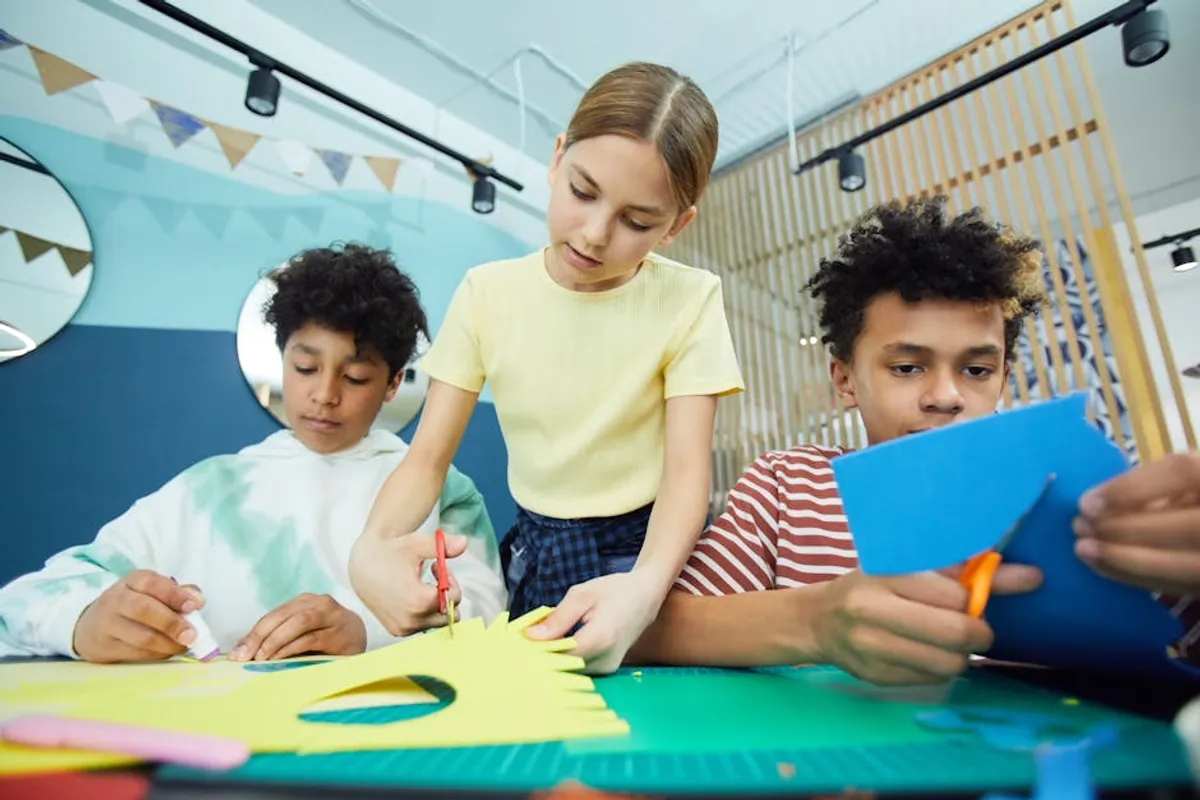
Selecting the right craft activities for children requires understanding their developmental stages, fine motor skills, attention spans, and cognitive abilities. An activity that engages a toddler might frustrate a pre-teen, while a complex project suitable for an older child could overwhelm a preschooler. The goal is to foster creativity, problem-solving, and skill development without inducing boredom or undue challenge. This guide outlines various craft categories, detailing their suitability for specific age groups and highlighting the practical considerations for each.
What to Consider When Choosing Crafts by Age
When evaluating craft options, several factors beyond just age guide effective selection. Always prioritize safety: ensure materials are non-toxic, age-appropriate, and free from choking hazards, especially for younger children. Consider the child's current skill level; some children develop fine motor skills earlier or later than their peers. The level of supervision required is also critical; intricate crafts often demand more adult involvement, while simpler activities can promote independent play. Think about the mess factor and your willingness to manage it, as some crafts, like painting or glitter projects, are inherently messier than others. Finally, assess the educational value and potential for creative expression. Does the craft encourage exploration, experimentation, or skill acquisition? Does it allow for individual interpretation or is it prescriptive?
1. Sensory Play Stations
Sensory play involves activities that stimulate a child's senses: touch, smell, taste, sight, and sound. These stations typically feature bins filled with materials like dry pasta, rice, water beads, sand, or even cooked oatmeal, often accompanied by scoops, small toys, and containers. The focus is on exploration through manipulation, pouring, sifting, and feeling different textures. For infants, this translates to supervised interaction with safe, often edible, materials or large, soft, textured objects. The primary benefit is neurological development, as sensory input helps build neural pathways in the brain, improving cognitive and motor skills.
Best For: Infants (0-12 months) and young toddlers (12-24 months) under direct supervision.
Pros:
- Enhances sensory development and fine motor skills.
- Promotes calm and focus through repetitive actions.
- Offers open-ended play without a specific "right" outcome.
- Can be easily customized with household items.
Cons:
- Requires constant, close supervision to prevent ingestion of small or unsafe items.
- Can be messy, necessitating designated play areas or floor coverings.
- Initial setup may require gathering various materials.
Verdict: Essential for early childhood development, sensory play provides fundamental learning experiences. Its effectiveness hinges on careful material selection and vigilant adult oversight to ensure safety and maximize exploration.
2. Edible Finger Painting
Edible finger painting utilizes safe, food-grade ingredients to create a paint-like medium suitable for the youngest artists who are prone to putting everything in their mouths. Common bases include yogurt, pureed fruits or vegetables, pudding, or even baby cereal mixed with water and food coloring. This craft allows infants and young toddlers to experience the tactile sensation of paint, explore color mixing, and engage in creative expression without health concerns if ingested. It's a low-pressure introduction to art, focusing on process over product.
Best For: Infants (6-18 months) and young toddlers (12-24 months) who are still exploring with their mouths.
Pros:
- Completely safe for ingestion, reducing parental worry.
- Encourages tactile exploration and sensory development.
- Introduces color concepts in a fun, non-toxic way.
- Requires minimal setup with common kitchen ingredients.
Cons:
- Limited color vibrancy compared to traditional paints.
- Can be very messy, requiring easy-to-clean surfaces and clothing.
- Artwork may not be long-lasting due to the perishable nature of materials.
Verdict: An excellent, worry-free entry point into creative expression for the youngest children. Its primary value lies in the sensory experience and safety, making the ephemeral nature of the "art" a minor consideration.
3. Large Block & Soft Toy Construction
This category encompasses building activities using oversized, lightweight materials like soft foam blocks, cardboard bricks, or even large stuffed animals and pillows. Unlike intricate construction sets, these materials are designed for gross motor skill development and imaginative play, allowing toddlers to build structures that they can interact with physically, such as forts, tunnels, or walls. The focus is on spatial reasoning, balance, and collaborative play, often involving movement and body engagement.
Best For: Toddlers (1-3 years) developing gross motor skills and spatial awareness.
Pros:
- Develops gross motor skills, balance, and coordination.
- Encourages imaginative and open-ended play.
- Safe for younger children with no small parts or sharp edges.
- Often suitable for collaborative play with peers or adults.
Cons:
- Requires significant space for construction and play.
- Storage of large blocks can be challenging in smaller environments.
- May not hold the attention of older children seeking more complex challenges.
Verdict: Fundamental for physical and imaginative development in toddlers, fostering a sense of accomplishment through large-scale creation. Its value is in the physical engagement and open-ended nature, despite space requirements.
4. Playdough & Clay Modeling
Playdough and modeling clay are versatile mediums that offer endless possibilities for creative expression and fine motor skill development. Children can roll, pinch, squeeze, cut, and shape the material, strengthening hand muscles crucial for writing and other detailed tasks. Various tools, such as cookie cutters, rolling pins, and plastic knives, can enhance the experience. Homemade playdough offers control over ingredients and scent, while commercial clays provide consistency and durability. This activity encourages imaginative storytelling and abstract representation.
Best For: Toddlers (1.5-3 years) and preschoolers (3-5 years) for fine motor development and imaginative play.
Pros:
- Significantly improves fine motor skills and hand-eye coordination.
- Encourages imaginative play and storytelling.
- Offers a calming, tactile sensory experience.
- Reusable and relatively inexpensive, especially if homemade.
Cons:
- Can be messy, sticking to surfaces and clothing.
- Some commercial products may contain allergens or strong scents.
- Requires proper storage to prevent drying out.
Verdict: A cornerstone craft for early childhood, providing substantial benefits for fine motor development and creative expression. Its versatility and tactile appeal make it a perennial favorite, despite minor mess potential.
5. Sticker & Found Object Collages
Collage making involves arranging and gluing various materials onto a surface, typically paper or cardboard. For younger children, this often means using large stickers, pre-cut shapes, fabric scraps, natural elements like leaves, or "found objects" such as buttons or yarn pieces. The act of peeling stickers, selecting items, and applying glue helps refine fine motor skills and hand-eye coordination. It encourages decision-making, pattern recognition, and creative composition without the need for drawing or painting abilities.
Best For: Preschoolers (2-4 years) for developing fine motor skills, spatial reasoning, and creative composition.
Pros:
- Excellent for developing pincer grasp and fine motor control.
- Promotes decision-making and artistic arrangement.
- Utilizes readily available and often recycled materials.
- Low-pressure art form, as there's no "wrong" way to create.
Cons:
- Can become messy with glue application.
- Small objects require supervision for children prone to mouthing.
- May require some adult assistance with cutting or material preparation.
Verdict: A highly accessible and effective craft for preschoolers, fostering critical early fine motor and creative skills. Its adaptability with various materials makes it a sustainable and engaging option.
6. Simple Paper Tearing & Gluing
This craft focuses on the fundamental actions of tearing paper by hand and then gluing the pieces onto a base. It's a foundational activity that builds hand strength, coordination, and an understanding of shape and form. Children can tear colored paper into strips or abstract shapes and then arrange them to create mosaics, abstract art, or even representational images. The tactile experience of tearing and the process of transforming simple materials into a new creation are key developmental benefits, preceding the use of scissors.
Best For: Preschoolers (3-5 years) for developing hand strength, fine motor skills, and an understanding of composition.
Pros:
- Strengthens hand muscles and improves bilateral coordination.
- Requires minimal and inexpensive materials (paper, glue).
- Encourages creativity and abstract thinking.
- Safe, as it avoids the use of scissors for very young children.
Cons:
- Can be messy with glue.
- May not appeal to children seeking more structured or complex crafts.
- Results are often abstract, which might not satisfy those looking for precise outcomes.
Verdict: A deceptively simple yet powerful craft for early fine motor and creative development. Its low barrier to entry and focus on process make it ideal for building foundational skills before introducing tools.
7. Sponge Painting & Stamp Making
Sponge painting involves using sponges of various shapes and textures to apply paint to paper, creating unique patterns and effects. Children can also create their own stamps by cutting shapes into sponges or potatoes, dipping them in paint, and pressing them onto a surface. This activity introduces different painting techniques, texture exploration, and basic printmaking concepts. It's less about precise brush control and more about experimenting with impressions, color, and repetition, making it accessible for developing artists.
Best For: Early elementary children (4-6 years) for exploring texture, color, and basic printmaking techniques.
Pros:
- Introduces diverse painting techniques beyond brushwork.
- Encourages experimentation with texture and pattern.
- Allows for creation of custom stamps, fostering originality.
- Accessible for children still developing fine motor control.
Cons:
- Can be messy, requiring protective surfaces and clothing.
- Requires supervision for younger children using cutting tools for stamps.
- Cleanup of sponges and paint can be time-consuming.
Verdict: An engaging and less intimidating alternative to traditional painting, ideal for fostering creativity and exploring artistic techniques. Its emphasis on experimentation makes it a valuable step in artistic development.
8. Basic Weaving & Yarn Crafts
Basic weaving and yarn crafts introduce children to textile arts, developing fine motor skills, pattern recognition, and patience. Activities can range from simple paper weaving (interlacing paper strips) to finger knitting, using a cardboard loom, or creating pom-poms and tassels. These crafts teach sequential steps and the satisfaction of building a fabric-like structure from individual strands. They also offer opportunities to explore color combinations and texture, resulting in tangible, often functional, creations.
Best For: Early elementary children (5-7 years) for developing fine motor skills, patience, and understanding of patterns.
Pros:
- Significantly improves fine motor dexterity and hand-eye coordination.
- Teaches patience and sequential thinking.
- Results in tangible, often wearable or decorative, items.
- Can be adapted to various skill levels, from simple to more complex.
Cons:
- Can be frustrating for children with short attention spans or limited fine motor control.
- Requires initial adult instruction and occasional assistance.
- Materials like yarn can tangle easily.
Verdict: An excellent craft for cultivating patience and intricate fine motor skills, yielding satisfying, usable results. Its structured nature provides a good balance between creative freedom and skill-building.
9. Friendship Bracelets & Beading
Friendship bracelets and beading activities involve stringing small beads onto thread or cord, or knotting embroidery floss into intricate patterns. These crafts are highly effective for refining fine motor skills, developing pattern recognition, and improving concentration. Children learn to follow instructions, count, and manage small components. The social aspect of creating and exchanging friendship bracelets adds an extra layer of engagement, fostering connection and personal expression through wearable art.
Best For: Mid-elementary children (7-9 years) for advanced fine motor skills, pattern following, and concentration.
Pros:
- Significantly enhances fine motor skills and dexterity.
- Teaches pattern recognition, counting, and sequential steps.
- Promotes concentration and patience.
- Creates personalized, wearable art that can be shared.
Cons:
- Small beads can be a choking hazard for younger siblings; requires careful storage.
- Intricate patterns can be challenging and require persistence.
- Can be frustrating if beads are dropped or threads tangle.
Verdict: A highly engaging craft that builds advanced fine motor skills and encourages social interaction. Its detailed nature provides a satisfying challenge for children ready for more intricate projects.
10. Model Building Kits
Model building kits involve assembling pre-fabricated parts to create a miniature replica of an object, such as a car, airplane, or architectural structure. These kits range in complexity from snap-together plastic models to intricate wooden or metal constructions requiring glue, paint, and specialized tools. They develop spatial reasoning, problem-solving skills, and the ability to follow multi-step instructions. The precision required fosters patience and attention to detail, culminating in a tangible, display-worthy achievement.
Best For: Late elementary children (9-12 years) for spatial reasoning, problem-solving, and following complex instructions.
Pros:
- Develops spatial awareness, logical thinking, and problem-solving skills.
- Teaches patience and attention to detail through multi-step assembly.
- Results in a tangible, often impressive, finished product.
- Wide variety of subjects and complexity levels available.
Cons:
- Can be frustrating if instructions are unclear or parts are missing.
- Requires significant time and sustained attention.
- May involve small, easily lost parts or specialized tools.
Verdict: An excellent choice for fostering precision, patience, and complex problem-solving. The satisfaction of completing an intricate model provides a strong sense of accomplishment, making it ideal for older children seeking a challenge.
11. Digital Art & Animation Software
Digital art and animation involve using software and digital tools to create illustrations, manipulate images, or produce short animated sequences. This can range from simple drawing apps on tablets to more sophisticated software on computers. It introduces children to digital literacy, graphic design principles, and the fundamentals of animation (e.g., frame-by-frame movement, character design). This medium offers undo functions and a vast array of colors and tools, encouraging experimentation without material waste, and opens pathways to modern creative careers.
Best For: Pre-teens and teenagers (10-14 years) for digital literacy, graphic design, and animation fundamentals.
Pros:
- Develops digital literacy and familiarity with creative software.
- Offers limitless possibilities for experimentation without material cost.
- Introduces principles of graphic design, color theory, and animation.
- Provides a platform for sharing creations online and receiving feedback.
Cons:
- Requires access to appropriate devices and software, which can be costly.
- Can lead to excessive screen time if not managed.
- Steep learning curve for more advanced software.
Verdict: A forward-thinking craft that merges creativity with technology, essential for developing digital skills. While it requires investment in tools and monitoring screen time, it unlocks significant creative potential in a modern context.
12. Advanced Drawing & Sketching Techniques
Advanced drawing and sketching move beyond basic doodles to focus on fundamental artistic principles like perspective, shading, proportion, and composition. This involves using various drawing mediums such as graphite pencils, charcoal, pastels, and ink, along with specialized papers and tools. Children learn to observe more critically, translate three-dimensional objects onto a two-dimensional surface, and develop their unique artistic style. Structured lessons or guided exercises are often beneficial for mastering these techniques.
Best For: Teenagers (12+ years) and highly motivated pre-teens for mastering artistic fundamentals and developing personal style.
Pros:
- Develops keen observational skills and critical thinking.
- Teaches fundamental artistic principles applicable to various art forms.
- Fosters patience, precision, and attention to detail.
- Provides a pathway for serious artistic development and portfolio building.
Cons:
- Can be frustrating if expectations for realism are too high too soon.
- Requires consistent practice and often formal instruction to progress significantly.
- Materials can become specialized and more expensive.